



Guide to E-Liquid Shelf Life and Fresh Storage
A slow-moving 10ml bottle at the back of a display can quietly turn into dead stock, while a well-managed e-liquid range stays fresh, presentable and ready to sell. This guide to e-liquid shelf life explains what dates on bottles mean, how storage affects flavour and nicotine quality, and how UK retailers can rotate stock without creating unnecessary waste.
For trade buyers, shelf life is more than a technical detail. It affects buying quantities, promotional planning, customer confidence and the condition in which every bottle leaves the shop. The good news is that sealed e-liquids are generally stable when they are stored properly. The key is ordering to realistic demand, protecting stock from heat and light, and keeping dated products moving.
What e-liquid shelf life really means
Most bottled e-liquids carry a best-before or expiry date printed on the label, box or bottle base. This date is set by the manufacturer and should always be the first point of reference. Exact shelf life varies by formulation, packaging and brand, but many sealed e-liquids are supplied with a period of roughly one to two years from manufacture when kept in suitable conditions.
That does not mean every bottle changes overnight on its printed date. E-liquid gradually changes as its ingredients are exposed to oxygen, warmth and light. The date is a quality guide: beyond it, the manufacturer is no longer guaranteeing the intended flavour, nicotine strength or overall vaping experience. For retail stock, selling within the marked date is the straightforward standard.
E-liquid is usually made from propylene glycol (PG), vegetable glycerine (VG), flavourings and, where applicable, nicotine. PG and VG are relatively stable ingredients. Nicotine and delicate flavour compounds tend to be more sensitive, which is why a citrus, menthol or layered dessert blend may lose its intended character before a simpler flavour does if storage has been poor.
Sealed bottles versus opened e-liquid
A factory-sealed bottle has the best chance of retaining its original profile because the liquid has limited contact with air. Once opened, oxygen enters the bottle each time the cap is removed. The process is gradual, but it can speed up colour changes, nicotine oxidation and flavour fade.
For an adult customer using a bottle regularly, an opened e-liquid is normally best used within a few months rather than kept indefinitely. There is no single deadline that suits every liquid and every user. A tightly recapped bottle stored in a cool cupboard will generally fare better than one left uncapped, carried around in a hot car or kept near a sunny window.
Shortfills deserve the same care. If a nicotine shot has been added, shake the bottle thoroughly and write the mixing date on the label or outer packaging. This is particularly useful for customers who prepare several bottles at once, and for shops that offer a mixing service where permitted by their operating procedures.
The storage conditions that protect flavour
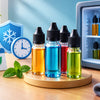
The best home for e-liquid is cool, dark and dry. A cupboard or stockroom shelf away from direct sunlight is usually ideal. There is no need to refrigerate standard e-liquid, and refrigeration can make high-VG liquids thicker and less convenient to use. Freezing is not recommended.
Heat is the bigger enemy. Avoid window displays in strong sun, stockrooms that become very warm in summer, radiators, heaters and vehicle dashboards. High temperatures can accelerate oxidation and can affect the balance of flavour over time. Clear bottles are especially vulnerable to light, although even tinted bottles should not be treated as sunlight-proof.
Keep bottles upright with caps firmly closed. This reduces the chance of leakage and helps keep the nozzle clean. It also makes dates and batch details easier to check during routine stock counts. For retailers, using enclosed shelving or keeping reserve stock in cartons offers an extra layer of protection from shop-floor light and temperature swings.
E-liquids and nicotine products must always be kept out of the reach and sight of children and pets. Retailers should maintain secure, age-restricted merchandising and storage procedures, while adult customers should use child-resistant packaging as intended and return bottles to a secure place after refilling.
How to read changes in colour, smell and consistency
E-liquid often darkens over time, particularly when it contains nicotine. This is commonly caused by oxidation and does not automatically mean a bottle is unusable before its date. A pale liquid can become amber or deeper brown, especially after opening. Some flavour profiles also naturally darken more than others.
Colour alone should not be used as a pass-or-fail test. Check the date, storage history and the bottle itself. A pronounced off smell, unexpected separation that does not improve after gentle shaking, visible contamination, a damaged seal or a leaking bottle are better reasons to remove stock from sale. If a product looks or smells significantly different from its normal profile, do not gamble on customer experience.
High-VG e-liquids can become thick in cooler weather. Letting the sealed bottle return naturally to room temperature and giving it a gentle shake is usually enough. Do not heat a bottle in a microwave, place it on a radiator or use boiling water. Excess heat can do more harm than good.
Steeping is not the same as ageing
Steeping is the controlled resting period some vapers use after mixing an e-liquid, especially a shortfill with a nicotine shot. During this time, flavours can settle and blend. A few flavour types may taste smoother after a short rest, while many modern pre-mixed e-liquids are designed to vape well straight away.
Ageing a bottle for months in the hope that it will improve is different. More time does not automatically create better flavour. Oxygen exposure can soften sharp notes, but it can also dull fruit flavours, alter nicotine character and leave a blend tasting flat. For retailers, the practical approach is simple: sell fresh stock first and do not market old stock as ‘well steeped’ unless that is a clearly stated manufacturer recommendation.
Stock rotation for vape shops and convenience retailers
Good stock rotation protects margin as well as quality. Use first expiry, first out rather than relying only on the order in which cartons arrived. A newer delivery can occasionally have a shorter date than existing stock, particularly across different batches or promotional lines.
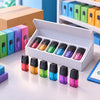
A quick weekly check is usually enough for fast-moving ranges, while slower lines should be reviewed during every stock count. Group e-liquids by category, bottle size and nicotine strength so dates are visible without pulling apart a packed display. Nic salts, 10ml freebase bottles and shortfills can move at very different speeds, so avoid treating the whole e-liquid wall as one sales pattern.
For larger orders, buy deeper into proven flavours and familiar strengths, then be more cautious with niche profiles or new launches. Trending flavours can sell through rapidly, but trends change. A mixed case can be smarter than committing heavily to an untested line, especially where local customer preferences are still developing.
When a product is approaching its date, make a clear commercial decision early. A sensible promotion while the product remains within date is more useful than discovering a full tray too late. Keep date-controlled stock separate from damaged or unsaleable products, and record write-offs accurately so future purchasing becomes sharper.
A practical guide to e-liquid shelf life for customers
Customers often ask whether an older bottle is still ‘good’. Give them clear, practical advice: check the manufacturer’s printed date, keep it cool and dark, close the cap properly and avoid using a bottle that is damaged, contaminated or noticeably off in smell or appearance. If they are unsure, replacing the bottle is the safer choice for a consistent vape.
It is also worth explaining that flavour loss is not always a fault with the device. A fresh coil will not restore a liquid that has been stored in heat for too long, and a favourite flavour may taste different when the bottle has been open for months. Helping customers identify the difference builds trust and reduces unnecessary returns.
For dependable replenishment, keep the range moving, store it properly and buy with real demand in mind. Fresh e-liquid is one of the simplest ways to keep repeat customers confident in every refill.