


How to Set Vape Wattage for Better Flavour
A new mod can show a lot more numbers than a simple pod kit, but the setting that changes the vape most is wattage. Knowing how to set vape wattage means better flavour, a more consistent draw and fewer coils lost to avoidable burnt hits. The right figure is not the highest one your device can reach. It is the power level that suits the fitted coil, the e-liquid and the way you vape.
For retailers, this is useful advice to have ready at the counter too. Customers often return with a coil issue that is really a setup issue. A quick explanation of coil ranges, priming and starting low can help them get the best from a new kit from day one.
What vape wattage actually controls
Wattage is the amount of power sent from the battery to the coil. More wattage heats the coil faster and hotter. That generally creates more vapour, a warmer inhale and a stronger flavour hit, but it also uses more e-liquid and battery charge.
Lower wattage creates a cooler, quieter vape with less vapour. It is commonly used for mouth-to-lung vaping, especially with higher-resistance coils and nicotine salts. Higher wattage is more often associated with direct-to-lung vaping, lower-resistance coils and shortfill e-liquids.
The key point is that wattage does not work in isolation. The coil resistance, wick material, airflow and liquid thickness all affect what the coil can handle. A 0.8 ohm pod coil and a 0.15 ohm mesh sub-ohm coil may be fitted to devices with adjustable power, but they need very different settings.
Start with the wattage printed on the coil
The coil itself is the most reliable place to begin. Most replacement coils have a recommended wattage range printed on the metal casing, such as 12-16W, 20-28W or 50-60W. Some pods show this information on the packaging or in the device instructions instead.
Use that range, not guesswork. It has been set by the manufacturer to give the coil enough power to vaporise e-liquid effectively without overheating the cotton. If a coil says 20-28W, do not begin at 28W just because that is the top end. Start near the bottom, around 20W or 21W, then take a few short puffs.
If the flavour is light and the vapour feels too cool, increase power in small steps of 1-2W. Pause after each adjustment. Once the flavour becomes clear and the vape feels satisfying, there is usually no need to push further. Going higher than necessary costs more e-liquid, reduces battery life and shortens coil lifespan.
Never exceed the coil’s stated maximum
Running above the recommended range can scorch the wick, especially when the tank is not fully saturated or the e-liquid is thick. A burnt coil does not recover by turning the wattage back down. It will normally need replacing.
It is also worth checking that the fitted coil is the one you think it is. Many coil ranges include several resistances that look similar but operate at very different wattages. This is particularly relevant for shops stocking multipacks, where clear coil selection helps prevent incorrect purchases and unnecessary returns.
How to set vape wattage on a regulated device
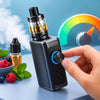
On most regulated vape mods, press the fire button three times or five times quickly to switch the device on. The screen will display the selected mode and wattage. Use the adjustment buttons, usually marked plus and minus, to move the number up or down.
Select standard wattage mode where possible. It may be labelled Wattage, Power or VW. Modes such as temperature control, smart mode, bypass and voltage can be useful on compatible devices, but standard wattage mode is the simplest place to start and gives predictable control.
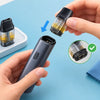
Set the wattage at the lower end of the coil recommendation. Fill the pod or tank, then let it stand for five to ten minutes if the coil is new. This is known as priming the coil. Take a few gentle puffs and increase the power gradually only if needed.
Some modern pod kits detect coil resistance and automatically suggest, or lock in, a suitable wattage. That is convenient, but it is still sensible to check the screen against the coil packaging. Automatic settings are a useful safeguard, not a reason to ignore the manufacturer’s guidance.
Match wattage to your vaping style and e-liquid
A suitable setting depends on what the customer wants from the kit. Mouth-to-lung vaping is designed to feel closer to a cigarette draw: tighter airflow, smaller vapour output and generally lower power. Coils around 0.8 to 1.2 ohms often run somewhere between 10W and 18W, although every device differs. Nic salt e-liquids are commonly used at this lower-power end because their 50/50 formulation wicks efficiently in pod coils.
Restricted direct-to-lung setups sit in the middle. They deliver more vapour and airflow than mouth-to-lung kits without the very high power demands of large sub-ohm tanks. Depending on the coil, this may mean roughly 18W to 35W.
Direct-to-lung vaping uses lower-resistance coils, open airflow and higher wattage. A sub-ohm coil may require 40W, 60W or more. These setups are usually better paired with lower-nicotine, higher-VG shortfills. High-VG liquids are thicker and perform well in larger, more powerful coils, while high-strength nic salts are generally not appropriate for high-wattage vaping.
There is no universal ‘best’ wattage. A customer moving from disposables or basic prefilled pods may prefer a low-power, straightforward kit. An experienced vaper using a mesh tank may prioritise dense vapour and warmer flavour. The correct setting is the one that stays within the coil range and delivers a comfortable, consistent vape.
Signs the wattage needs adjusting
Your vape will usually tell you when the setting is wrong. Weak flavour, little vapour and a cool draw can mean the wattage is too low, assuming the coil is properly primed and the battery has charge. Increase the setting a little at a time.
A harsh inhale, unusually hot vapour or a faint burnt taste can mean the wattage is too high. Lower it immediately. If the burnt taste remains, the cotton may already be scorched. Replace the coil or pod rather than continuing to use it.
Gurgling, spitting or leaking is not always a wattage problem. It can happen when a coil is flooded, when liquid enters the centre airflow tube or when a device is left in a hot car. However, power that is too low can sometimes leave excess e-liquid in the coil because it is not being vaporised efficiently.
If the device displays ‘Check Atomiser’, ‘No Coil’ or a similar message, do not keep pressing the fire button. Remove the pod or tank, check that the coil is properly installed and make sure the contacts are clean and dry. Wattage adjustments cannot solve a connection problem.
Battery and coil safety for adjustable kits
Regulated vape kits have built-in safety protections, but they should still be used as instructed. Use compatible batteries where a mod takes removable cells, keep battery wraps intact and carry spare cells in a proper battery case rather than loose in a pocket or bag. Charge with suitable equipment and replace damaged batteries promptly.
Do not use a coil that is damaged, visibly leaking heavily or past its best. Keep the tank topped up so the cotton remains saturated, particularly at higher wattages. Chain vaping can also outpace the wick’s ability to draw in e-liquid. If you have taken several puffs in quick succession, give the coil a moment before the next one.
For customers buying a first adjustable kit, a device with a clear screen, sensible power range and readily available replacement coils is often the better long-term choice. Vapeo stocks recognised kit and coil brands across pod, starter and advanced categories, making it easier to match a setup to the user rather than selling power they do not need.
A simple setup routine that protects the coil
When fitting any new coil, fill the tank or pod and allow the e-liquid to soak into the cotton before vaping. Set the device at the bottom of the printed wattage range, take a few gentle puffs, then raise the wattage slowly until the flavour and warmth feel right. Keep an eye on e-liquid level, especially with higher-power coils that consume liquid quickly.
That small routine takes minutes, yet it can make a new coil last considerably longer. The best wattage is not a number to chase - it is the setting that makes each puff satisfying without wasting e-liquid, battery charge or stock.