


Open Pod Versus Closed Pod: Key Differences
A customer asks for a simple, reliable vape, while another wants their favourite nic salt in three different flavours. That is where the open pod versus closed pod decision matters. Both formats can offer a compact rechargeable alternative to traditional vape kits, but they create very different buying habits, refill cycles and stock requirements for retailers.
For adult customers and trade buyers, the best option is rarely about which pod system is universally better. It is about convenience, choice, compatibility and the kind of repeat sale a shop wants to support.
What is an open pod system?
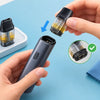
An open pod system uses a refillable pod cartridge. The customer fills the pod with their chosen e-liquid, normally through a small silicone-sealed port on the side or base. Most open pod kits are designed for use with 50/50 e-liquids or nicotine salts, although every device has its own recommended VG/PG range and it is worth checking this before selling or using it.
The pod connects to a rechargeable battery device, often magnetically. Some systems use pods with built-in coils, so the whole pod is replaced when flavour quality drops or the coil reaches the end of its life. Others use replaceable coils inside a reusable pod. Both are considered open systems because the user chooses and adds the e-liquid.
Open pods suit adult vapers who value flexibility. One compatible device can be used with a broad choice of flavour profiles, nicotine strengths and e-liquid brands. For a retailer, that creates a natural route from a starter kit sale into repeat purchases of bottled e-liquid and replacement pods or coils.
What is a closed pod system?
A closed pod system uses prefilled, manufacturer-specific pods. The user clicks or drops the pod into a compatible rechargeable device and starts vaping. There is no bottle, no filling port and no need to handle e-liquid during day-to-day use.
Closed pod devices are built around speed and simplicity. Customers choose a flavour, replace the empty pod and carry on. Popular systems often benefit from strong brand recognition, especially among adults moving from single-use products towards a rechargeable format with less day-to-day fuss.
The important detail is compatibility. A closed pod is usually only made for one family of devices. A pod from one brand or range will not automatically fit another, even if both look similar. For retailers, clear product naming, shelf labelling and staff knowledge help prevent incorrect purchases and avoidable returns.
Open pod versus closed pod: the main differences
The clearest difference is who controls the e-liquid choice. With an open pod, the user selects and refills their own bottle. With a closed pod, the manufacturer supplies the liquid in a sealed cartridge.
That changes the customer experience straight away. Open pods involve a little more routine: filling the pod, allowing a new coil to saturate where required, and keeping the right bottle to hand. Closed pods reduce those steps. They are generally cleaner to swap and easier to understand at the till, particularly for someone who does not want settings, spare coils or a collection of bottles.
Flavour range is another major dividing line. Open pod users can choose from the wider bottled e-liquid market, provided the liquid works with their device. This is particularly attractive to established vapers who know what they like, or customers who enjoy changing flavours without changing hardware. Closed pod users are limited to the flavours and strengths produced for their chosen platform. The range may still be strong, but it is a curated range rather than an open catalogue.
Running cost depends on usage, pod capacity, replacement frequency and the price of compatible consumables. In many cases, an open pod can offer lower ongoing costs because bottled e-liquid provides more millilitres per purchase. However, that does not automatically make it the best value for every customer. If somebody prioritises quick pod changes and no filling, the convenience of a closed pod may justify the difference.
Why closed pods are strong for quick repeat sales
Closed pod systems are straightforward to sell because the purchase journey is easy to explain: choose the compatible device, then choose the matching prefilled pods. This makes them well suited to convenience-led customers who want a familiar format and minimal maintenance.
They can also simplify stock conversations. Instead of matching a device with bottles, coils and pod types, the retailer focuses on a device and its dedicated pod range. High-demand flavours can be stocked in depth, while slower lines can be kept tighter until sales data proves demand.
There is a trade-off. A closed ecosystem can tie repeat sales to one brand's availability. If the most popular pod flavour is out of stock, the customer cannot simply buy a different bottle and refill. A sensible range therefore includes enough flavour choice and dependable replenishment across the core compatible pods, not only the device itself.
Why open pods build bigger baskets
Open pod kits give retailers more ways to serve the customer over time. A first purchase may include a device, a replacement pod pack and one or two suitable e-liquids. Once the customer has found a preferred flavour and strength, repeat buying can become consistent and profitable without requiring a new device each time.
This format is also useful for customers who want more control. They may prefer a particular nic salt brand, a less sweet flavour, or a nicotine-free e-liquid. An open device gives them room to make those choices, subject to the kit's specifications.
The downside is that the category needs clearer guidance. New users need to know which pods fit which device, when to replace a pod or coil, and which e-liquid type is appropriate. A refillable pod paired with the wrong liquid can perform poorly, leak or shorten coil life. Good product descriptions and clear counter advice make a real difference here.
Stock planning for retailers
The strongest vape fixture usually has room for both formats. Closed pods meet demand for speed, brand familiarity and simple replenishment. Open pods bring e-liquid choice, accessory sales and stronger opportunities for customers who want a more tailored setup.
For closed systems, stock the devices alongside the matching pods and keep the fastest-moving flavours visible. Avoid bringing in a device range without adequate pod support. A rechargeable device is not much use to a returning customer if its compatible refills are unavailable.
For open systems, think in combinations rather than isolated SKUs. A compact refillable pod kit needs compatible replacement pods, and those pods need a sensible selection of suitable e-liquids. Nic salts in popular flavour families often make logical companion stock, but it is better to match recommendations to the device and adult customer's preference than to push every bottle as universal.
A useful starting assortment should cover familiar flavours, not just the latest trend. Fruity and cooling profiles may drive attention, while tobacco-inspired and mint options can matter to adults transitioning from cigarettes. Sales history should decide what earns deeper stock. Trending products create footfall, but reliable replenishment products keep customers returning.
Choosing the right format for the customer
Recommend a closed pod when the adult customer wants the least complicated route: a rechargeable device, prefilled compatible pods and straightforward flavour changes. It is a particularly practical option for customers who do not want to carry bottles or learn coil maintenance.
Recommend an open pod when choice matters more. It is often better for adults who already use bottled e-liquid, want more flavour freedom, or prefer to control their refill routine. Explain the upkeep honestly: pods and coils are consumable items, and the right e-liquid matters.
For either format, keep the conversation focused on compatibility and responsible use. Vaping products are for adults aged 18 and over, and they are not intended for non-smokers. Product packaging, nicotine strength and device instructions should always be checked before purchase.
The practical answer to open pod versus closed pod is to stock and recommend the format that removes friction for that individual buyer. A customer who finds refilling inconvenient will not value an open system's flexibility, while a customer who wants freedom from fixed flavours may quickly outgrow a closed pod. Get that match right, and the next purchase becomes much easier for everyone.